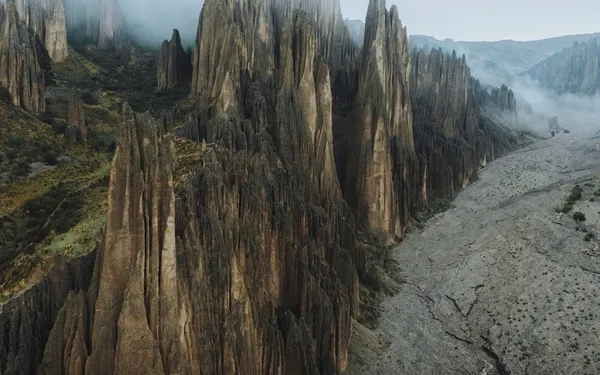
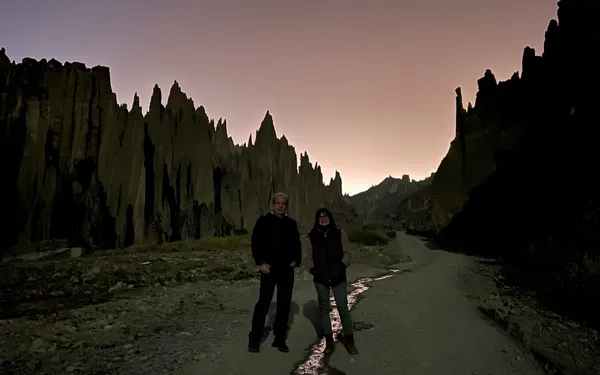
Side by side
Why they look different
Both are the same material: the soft sediment the whole bowl of La Paz is carved into. Rain erodes it unevenly, harder caps protect columns, needles are left. At Valle de la Luna the bed is thinner and the slopes gentler, so the shapes are shorter and rounder; at Valle de las Ánimas the bed is thick and exposed on a steep, wet slope, so the same process makes towers. The geology page has the long version.
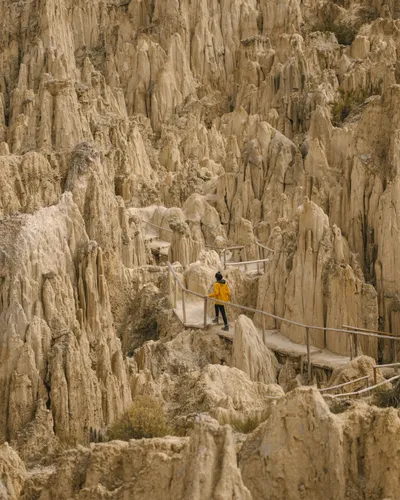
What Valle de la Luna does well
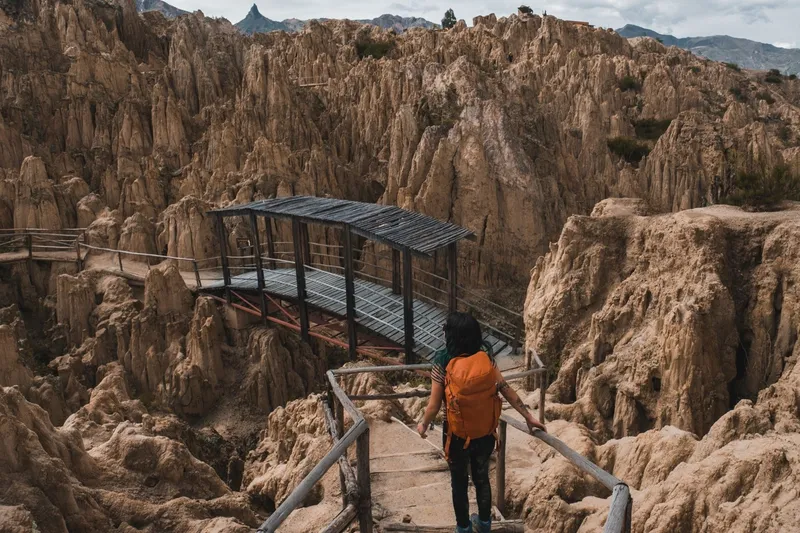
It is easy, and easy has value. Thirty minutes from the center, a ticket booth, toilets, a safe boardwalk with handrails and a bridge, 45 minutes and you have seen it. On a first day at altitude, with small children, or with a flight that afternoon, it is the right choice — and the bridge over the pinnacles is a good photograph.
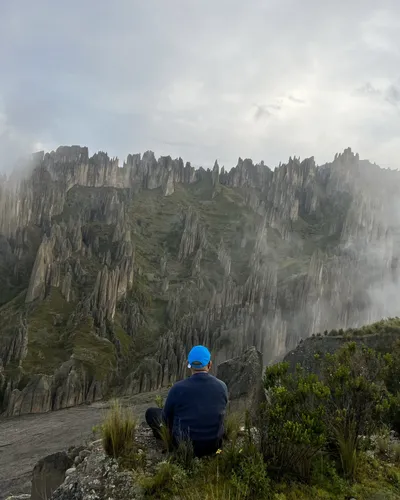
What Valle de las Ánimas does that Luna cannot
Silence, scale and the feeling of being inside the landscape rather than beside it. You walk between spires taller than buildings, on trails, with the valley to yourselves at first light. It asks a little more — 45 minutes of road, loose ground, 300 m more altitude, no toilets — and gives back the thing people come to Bolivia for.