The hours
WhenLightWhat it gives you
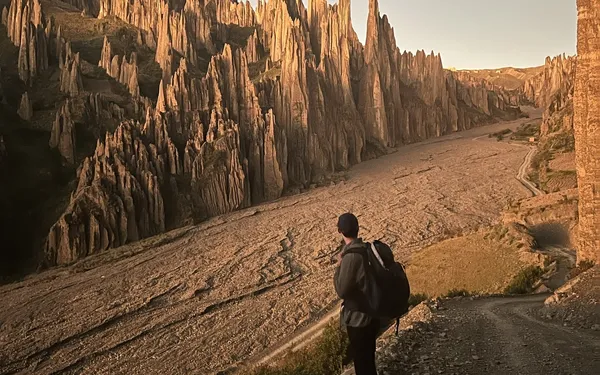
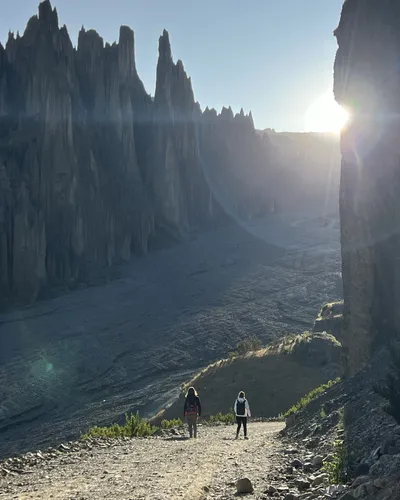
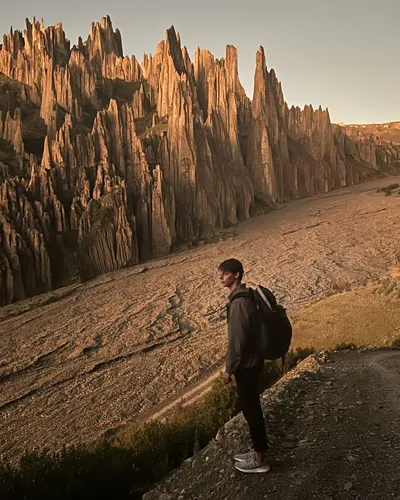
6–6:45 amLow, side, warmLong shadows, orange stone, empty valley. The photographer’s hour.
7–9 amSide, coolerStill shaped light, more detail in the shadows. Comfortable to walk and shoot.
10 am–3 pmOverhead, hardFlat. Good for walking, poor for pictures — unless the rainy-season clouds roll in.
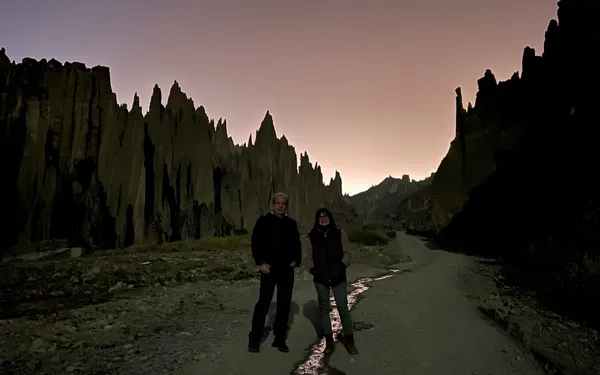
4–6:45 pmLow, side, warmOrange again from the west, plus La Paz lighting up below the ridge.
Weather is not the enemy
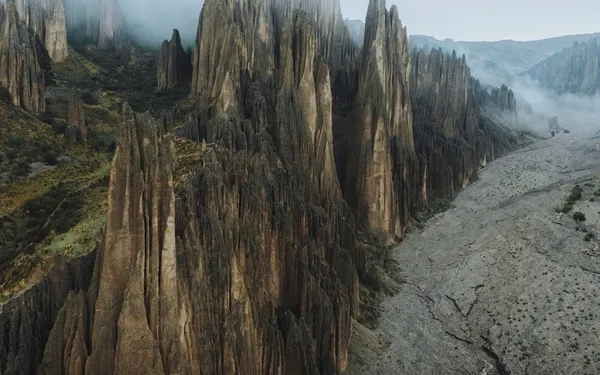
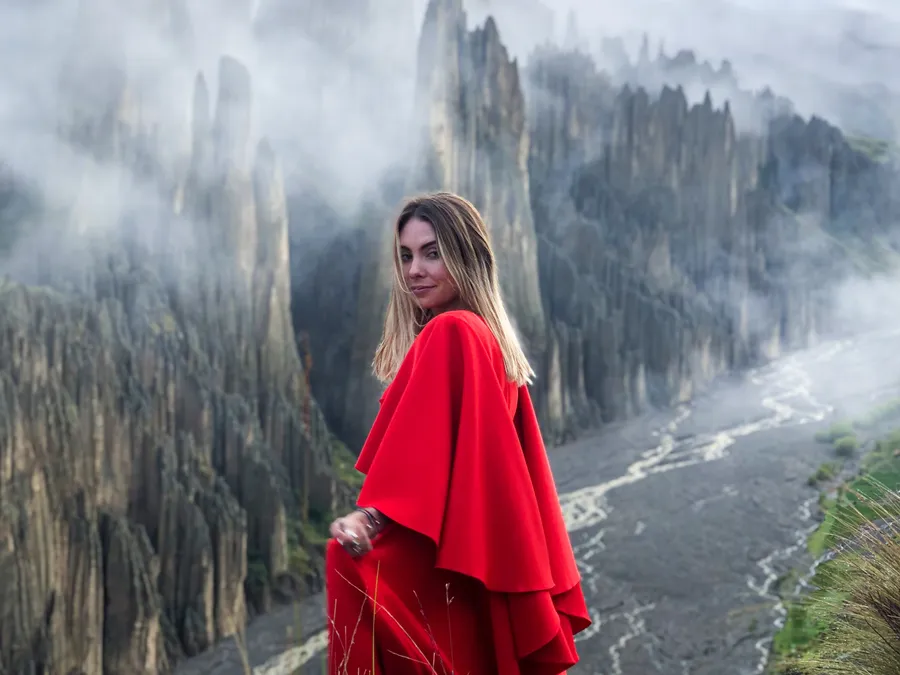
Dry season (May to September) gives clean light and sharp shadows every morning, and it is the only season the vehicle can drive into the middle of the valley — useful when you carry a heavy bag. The rainy season (December to March) gives something the dry season cannot: clouds drifting between the spires, mist filling the gullies, the needles appearing and disappearing. Some of the best photographs of this valley were taken in bad weather. Protect the camera, wait ten minutes, and shoot when the cloud thins.
Where to stand
- The ridge viewpoint — the classic: both walls of spires with the riverbed between them, the city in the distance. Wide lens, person on the edge for scale. About 25 minutes uphill at a slow pace.
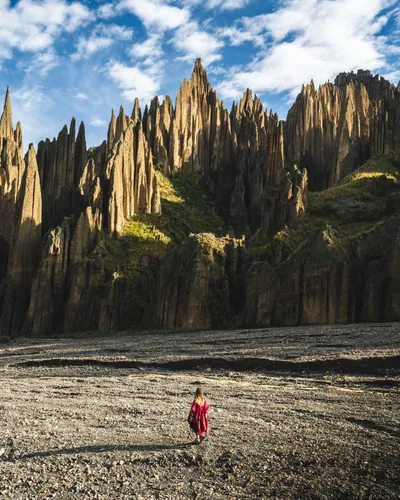
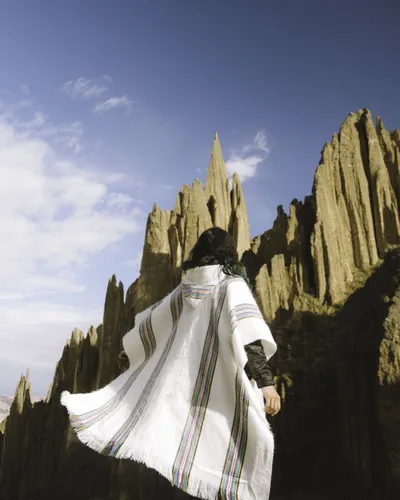
- The riverbed — looking up. The spires tower; a 24 mm lens held vertical does it. Best in the first hour, when one wall is lit and the other still dark.
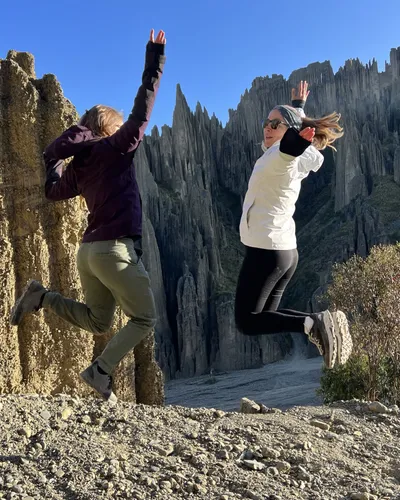
- Inside the gullies — where the trail squeezes between columns. Long lens, compress the needles, isolate a cap against the sky.
- The road in — at dusk the road becomes a leading line into silhouetted spires.
What to bring, for the camera
- A wide lens (16–24 mm) for the walls and the riverbed
- A long lens (70 mm and up) for caps, textures and people on the ridge
- A spare battery — cold mornings and altitude drain them fast
- A cloth: the dust is fine and it gets everywhere
- One piece of coloured clothing for your subject: red or white against grey stone
- A head torch if you shoot sunset — you walk down in the dark
Drones: allowed, but tell the community members at the chain first, every time. It is the single most important rule of this page.
Questions
Can I fly a drone?
Yes — but always tell the community members at the chain first. An unannounced drone is taken as a threat and the reaction can be hostile. On our tours the guide handles it for you.
Phone or camera?
A phone is enough for the wide views and the mist. A camera with a long lens earns its weight for the detail: a single spire, a cap, a person on the ridge. Bring a spare battery either way — cold and altitude drain them.
Is there anywhere to charge or buy a memory card?
No. Nothing past the chain: no shops, no power, no toilets. Come with what you need.
Do you do photo tours?
The private tour is the photo tour: start when the light says so, stay as long as the light lasts, and a guide who knows where to stand. Tell us you are shooting when you book.