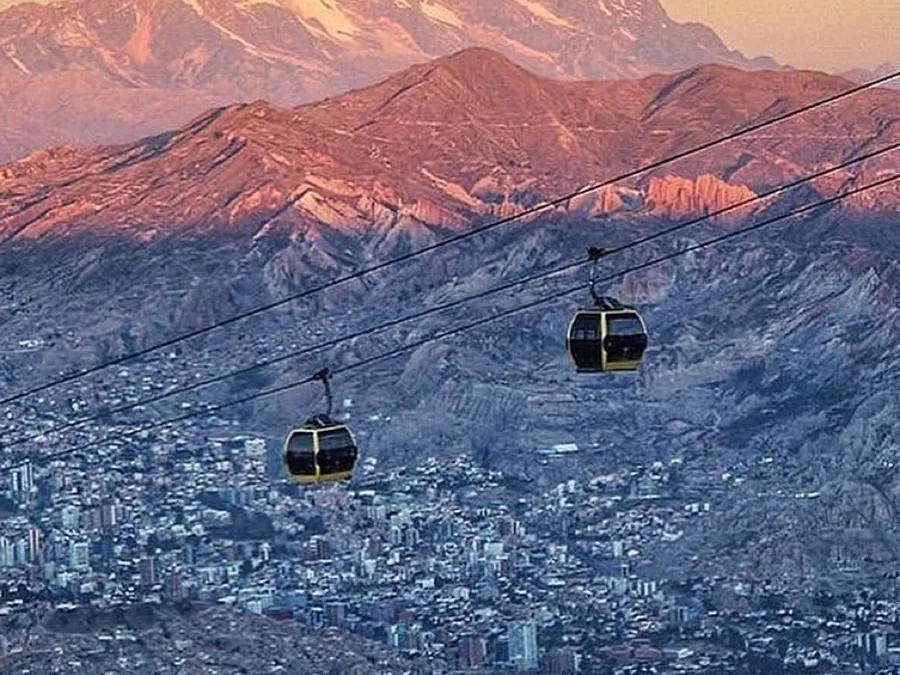
Mi Teleférico — the cable cars
Ten lines — Red, Yellow, Green, Blue, Orange, White, Light Blue, Purple, Brown and Silver — stitched across the city and up to El Alto. A ride on one line costs 3 Bs; each transfer adds 2 Bs, so a trip with one change is 5 Bs and with two, 7 Bs. Buy a card or a ticket at any station. The Yellow line from Sopocachi up to the rim, and the Red line from the center to El Alto, are the two to ride for the view — at sunset if you can.
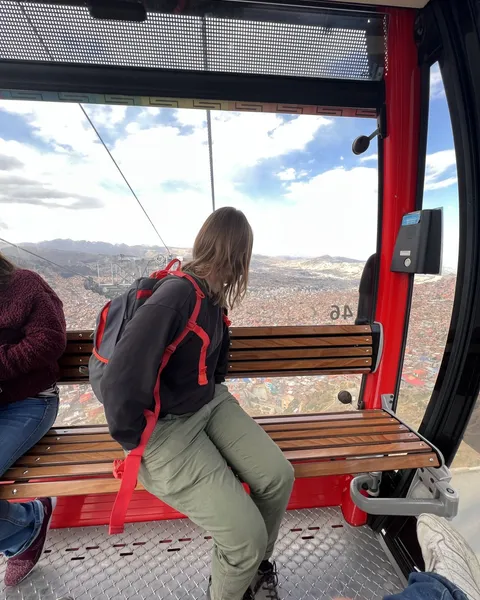
Two things first-timers get wrong: cabins do not stop, they slow — step in as it passes; and the stations are big, so allow ten minutes for a transfer.
PumaKatari and minibuses
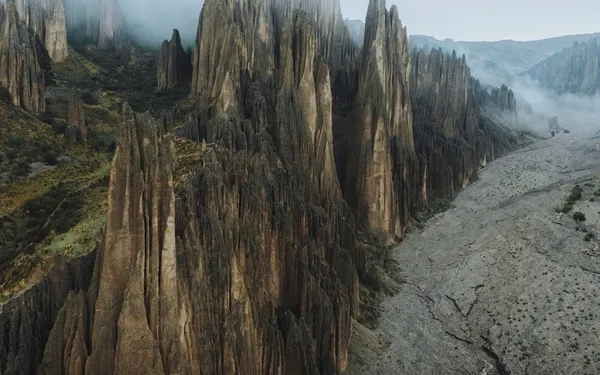
The PumaKatari are the city’s proper buses: numbered routes, fixed stops, 3 Bs. The minibuses are the vans that go everywhere else, with the route painted on the windscreen, about 4 Bs; you flag them down and say “voy a bajar” when you want off. For the valley: PumaKatari to its last stop in Chasquipampa, or minibus 844 of the yellow line, then a walk to the chain — about an hour from the center.
Taxis and ride apps
By day, any taxi is fine and cheap: 60–80 Bs from the center to the valley, less from Zona Sur, with the fare agreed before you get in. At night, use a radio taxi — a company name and number on the roof — or a ride app, and sit in the back. Nothing dramatic; the same rule as any big city.
From the airport
El Alto airport sits at 4,061 m on the rim of the bowl, and the road drops 400 m into the city in 25–40 minutes. We pick you up — $25 to downtown, $35 to Zona Sur, private taxi for one to three people — and we plan your first day around the altitude. If you take an official airport taxi instead, agree the price at the desk.